
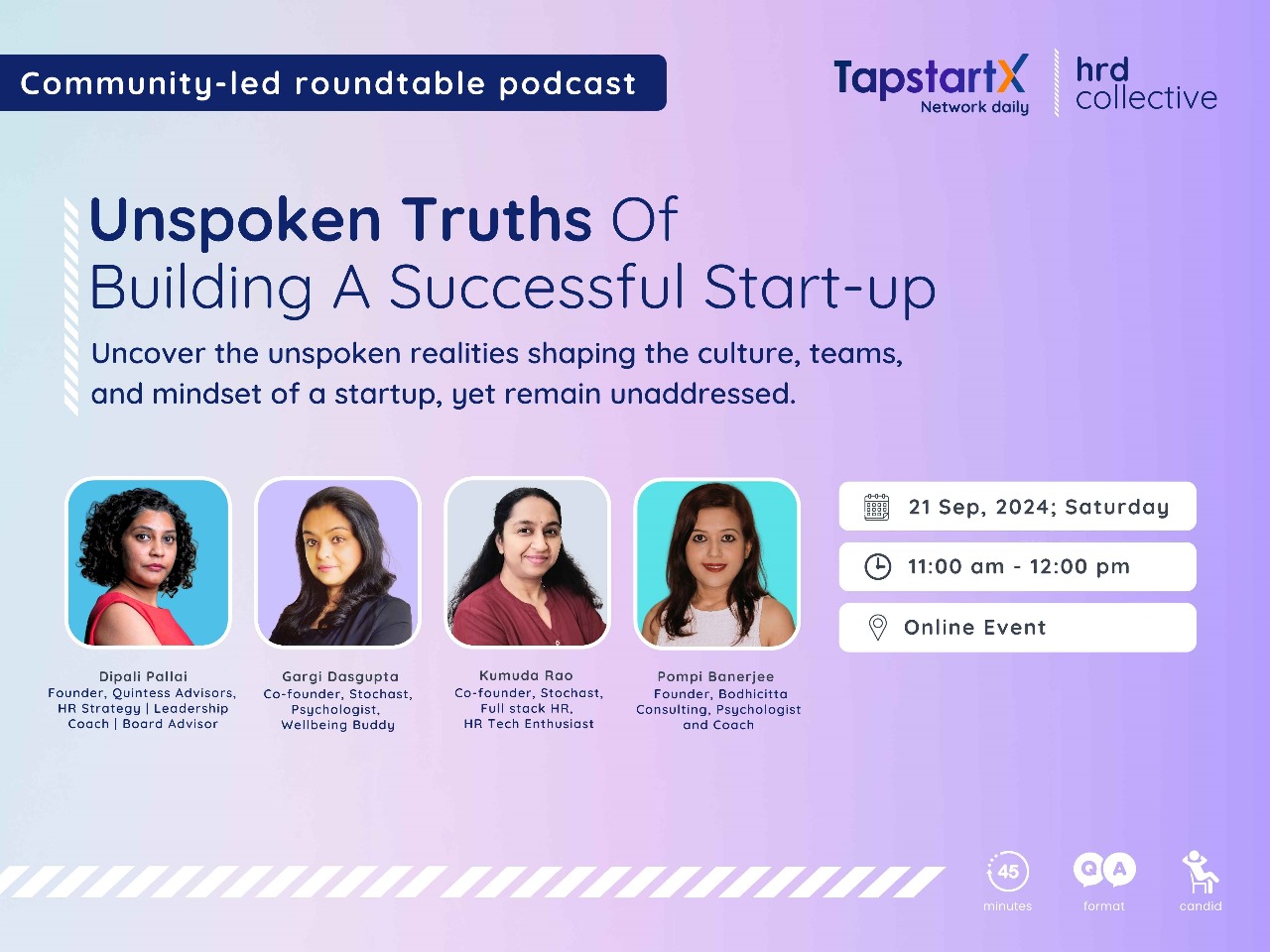
As founders, we’re all familiar with the glorious highs and heart-wrenching lows of building a startup from scratch. It’s not for the faint-hearted. The startup journey is like riding a rollercoaster with twists you didn’t expect, climbs that seem endless, and, of course, those drops that take your breath away. And let’s be honest, no one really talks about what happens behind the scenes.
This is exactly why we launched the HRD Collective—a series of roundtables aimed at digging into the gritty, unspoken truths of building a successful startup. Powered by TapstartX, our digital-first networking platform, we bring together entrepreneurs, investors, and enablers from across India’s startup ecosystem. With over 5,000 entrepreneurs and partnerships with 35+ investors, TapstartX is here to enable founders every step of the way, whether through networking, marketing, or even helping to build the right team and culture.
And today, I, Amrrit Achipallya, along with my co-founder, Suranjika Mohapatra, had the pleasure of enabling the first roundtable of this series. A huge shoutout to Jyoti Nadagadalli, co-founder of Stochast, who was pivotal in setting up this event but couldn’t be with us in the discussion. Her vision for this conversation truly set the tone.
Now, let me introduce the fantastic speakers who made this session insightful, to say the least:
- Dipali Pallai, Founder of Quintess Advisors: Dipali offers HR strategy and leadership coaching to startups. With nearly two decades of multi-industry experience, she focuses on HR strategy, business coaching, and change management.
- Kumuda Rao, Co-founder of Stochast: A full-stack HR expert with nearly two decades of experience, Kumuda has worked with startups to build teams, cultures, and HR systems that scale with the business. Her passion lies in finding the balance between human factors and technology.
- Gargi Dasgupta, Co-founder of Stochast: Gargi brings over 20 years of experience as an HR professional and psychologist. She focuses on emotional well-being and work-life harmony, which are critical for startups in today’s high-paced world.
- Pompi Banerjee, Founder of Bodhicitta Consulting: Pompi collaborates with organizations to build strategies that focus on well-being and thriving. She’s worked with founders and organizations to create effective HR systems that reduce waste and drive success.
Special shoutout to Dipali for beautifully convening the session for the audience and the panel we had. With these introductions, let’s dive into the insights from the discussion!
Building Culture and Structure: When Is the Right Time?
The first question, posed to Kumuda, was all about timing—when is the right time to define a company’s structure, policies, and culture? Kumuda shared that many founders wait too long to establish these foundations. “Culture should start taking shape from Day 1,” she said, stressing the importance of starting small but defining the essence of how the team operates early on. She added, “It doesn’t have to be perfect from the start, but the foundations laid early will help steer the ship in the right direction.”
Her key takeaway? Build structure gradually as the company grows but set the tone for your culture from the beginning.
Well-being in the Hustle Culture: Founder Burnout
Gargi brought the focus onto the well-being of founders in today’s “hustle-and-bustle” culture. Her question was: What does wellness mean for founders in a startup environment? She reflected on how startup founders, while driven, often neglect their own well-being. “You can’t pour from an empty cup,” she said. Gargi pointed out the major challenges that affect founders’ well-being, such as long working hours, constant pressure, and the feeling that they always need to be “on.”
She advocated for founders to carve out time for self-care and mindfulness, suggesting, “You need to create boundaries, even when it feels like you can’t afford to.”
Building Aligned Teams that Thrive
Pompi’s insights were all about how to build a team that thrives and is aligned with the company’s mission. She spoke about the importance of clarity in leadership and team roles. “A team can only thrive when there’s transparency and alignment,” she explained, stressing that founders need to communicate their vision clearly and regularly with their teams.
“Teams can’t read your mind,” Pompi said with a chuckle, “so, if you want them to stay on the same page, you’ve got to keep the communication flowing.”
Are Founders Superheroes? The Reality Check
Next up, Kumuda took on the question of whether founders need to be superheroes, knowing it all, all the time. Her answer? Absolutely not! “Founders need to accept that they don’t have all the answers,” she said. “The key is to surround yourself with people who can help fill in the gaps.”
This theme resonated deeply with the group, as many founders often feel the pressure to be experts in everything, from finance to HR to product development. Kumuda encouraged the audience to focus on their strengths and delegate the rest.
Leadership Is Lonely, Growth Is Painful
Gargi followed up with a reality check on the emotional toll of being a founder. Leadership, she pointed out, can often be lonely. “You’re carrying the weight of the entire company on your shoulders, and it can be isolating,” she shared. Gargi offered advice on how to navigate these lonely moments by building a support network, whether through mentorship, peer groups, or advisors.
She also highlighted that growth is painful. “It forces you out of your comfort zone,” she said, emphasizing that founders should embrace the discomfort as part of the process.
Reducing Waste in Your Organization
Pompi shared practical tips on how founders can reduce invisible waste in their organizations—whether it’s time, energy, or financial resources. “Often, we’re so caught up in the day-to-day that we don’t notice where the inefficiencies lie,” she explained. Pompi encouraged founders to take a step back regularly to review processes and identify areas where they could tighten up.
Decision-Making: Dynamic vs. Impulsive
Finally, Dipali tackled the question of how to differentiate between dynamic decision-making and impulsive choices. This is something all founders struggle with—myself included. Dipali shared how making quick decisions is necessary for startups, but there’s a fine line between being agile and being impulsive.
“Founders are often faced with the internal tension of acting fast or taking a step back,” she said. Dipali emphasized the importance of having a structured decision-making framework. “It’s crucial to have sounding boards—mentors or advisors who can make you pause and ask the right questions before moving forward,” she added.
She also gave a shoutout to Pompi’s earlier point on waste, tying it into how indecision or impulsiveness can lead to wasted time and misaligned teams.
Audience Q&A
The session wrapped up with a vibrant audience Q&A. One of the questions that sparked a lot of discussion was how to create accountability for cultural practices in a startup. Kumuda suggested establishing clear values and mission statements and holding regular feedback sessions with teams.
Other questions addressed communication strategies with co-founders, especially when there are misaligned priorities, and how to manage work pressure when product goals are unclear. Gargi’s advice? “Break tasks down into smaller, more manageable chunks, and communicate openly with your team.”
Wrapping Up
As we brought the session to a close, it was clear that the unspoken truths of startup life had resonated with everyone. It was an enriching discussion, and I want to thank Kumuda, Gargi, Pompi, and Dipali for their insightful contributions. Special thanks again to Jyoti for sparking the idea for this roundtable, and my partner in everything, Suranjika, for making all of this possible.
Here’s to more open conversations about the realities of startup life. Let’s keep building, learning, and supporting one another on this crazy journey!
Here’s the link to the full session on YouTube.